
The cumulative impacts of replacing native species plantations with pines undermine biodiversity, ecosystem function, and landscape resilience - and leaves no place for Toto! Watch him tell you why.
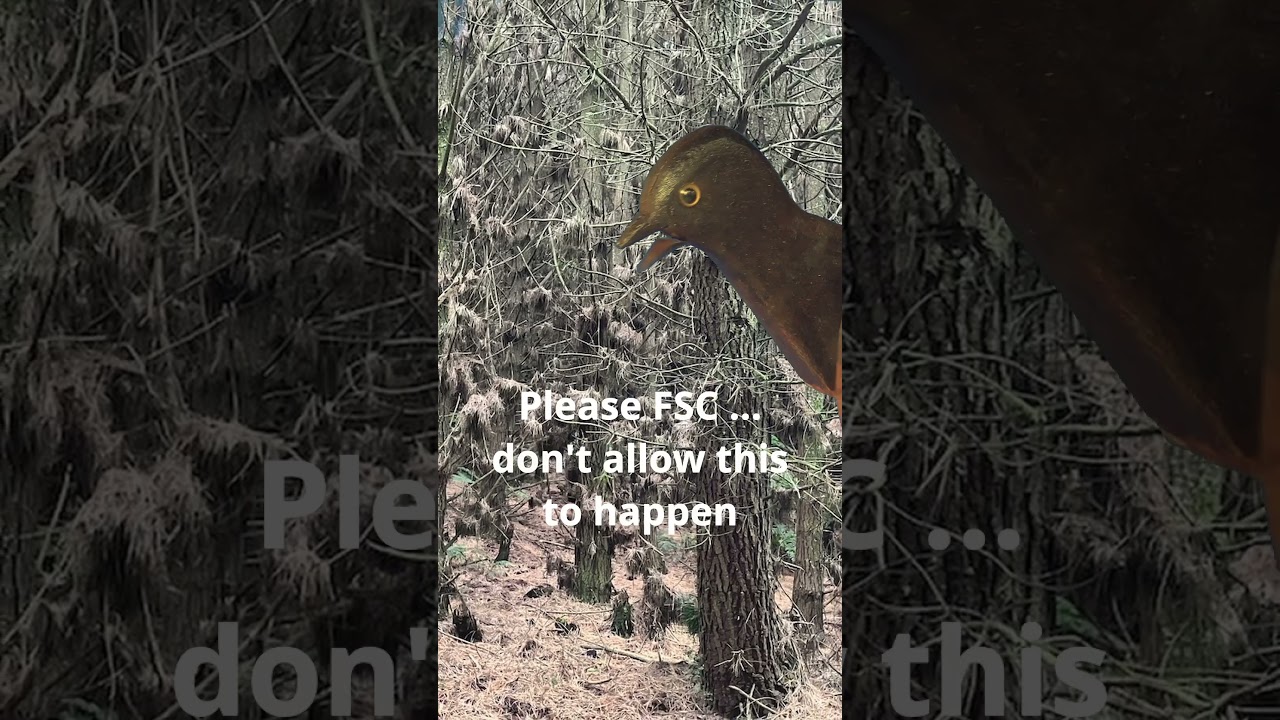
Click Toto to watch (12 seconds)
The replacement of native eucalyptus plantations in Gippsland — including Mountain Ash (Eucalyptus regnans), Blue Gum (E. globulus), and Shining Gum (E. nitens) — with exotic Pine plantations (Pinus radiata) poses significant and well-documented ecological risks. Conversion to pine results in the loss of native plant communities that support complex pollination networks, soil fungi, and rare or threatened flora such as the critically endangered Slender Tree-fern (Cyathea cunninghamii) and Butterfly Orchid (Sarcochilus australis). Native eucalypt systems maintain structural and functional diversity that supports a broad range of wildlife - including the Lyrebird.
In contrast, P. radiata plantations exhibit low understorey diversity and provide limited habitat for species of conservation concern, including the Powerful Owl (Ninox strenua) and Gang-gang Cockatoo (Callocephalon fimbriatum).Pine plantations also degrade soil health, reduce microbial diversity, and can lower streamflow by up to 40%, increasing landscape drying and fire risk. Their uniform fuel structure contributes to higher-intensity bushfires and poses severe threats to adjacent Cool Temperate Rainforest communities.
Additionally, P. radiata is recognised as an environmental weed in Victoria, spreading into adjacent native vegetation and inhibiting regeneration of native flora. Using Arthur Rylah Institute ranking, pines are South Gippsland’s third most threatening weed, worse than Blackberry and Ragwort.
The cumulative impacts of replacing native species plantations with pines undermine biodiversity, ecosystem function, and landscape resilience - and leaves no place for Toto!
We support FSC’s position that native species should not be replanted with exotic species such as pines.