

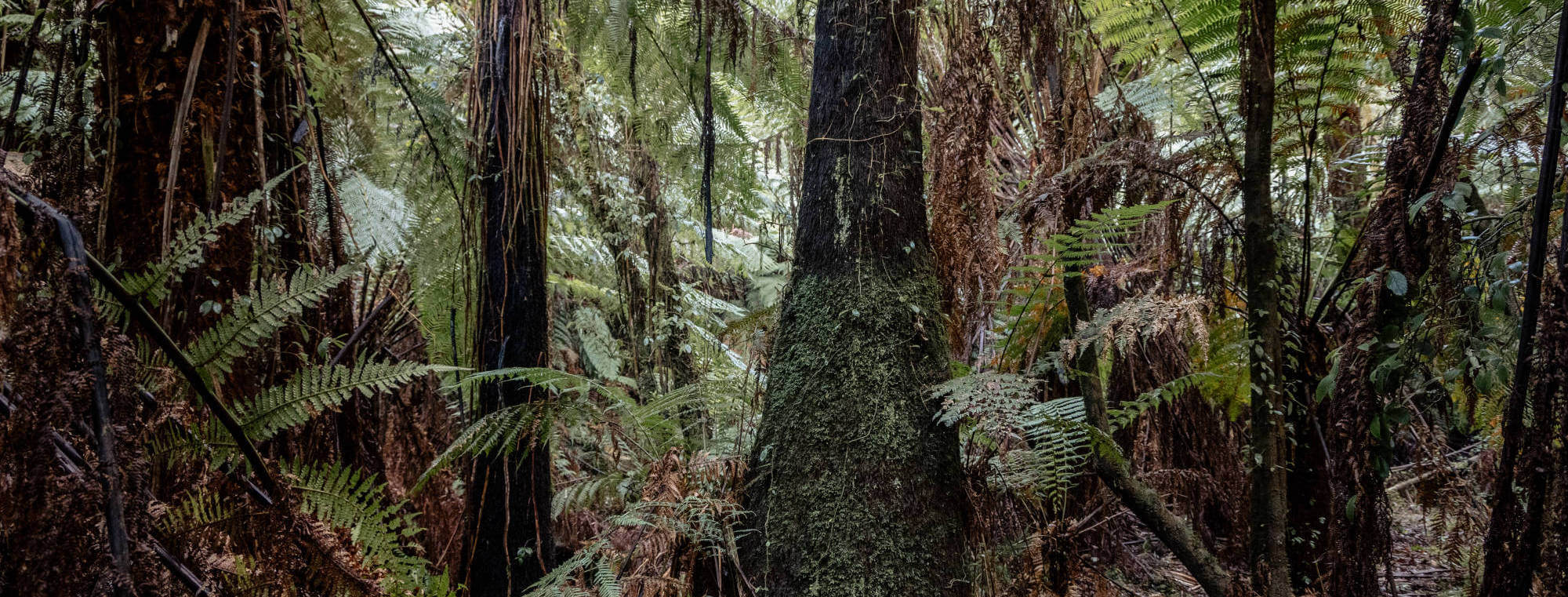
Protecting this biolink will create a Koala Corridor and a Slender Tree-fern Sanctuary and provide hollows and habitat for many of our most threatened species.
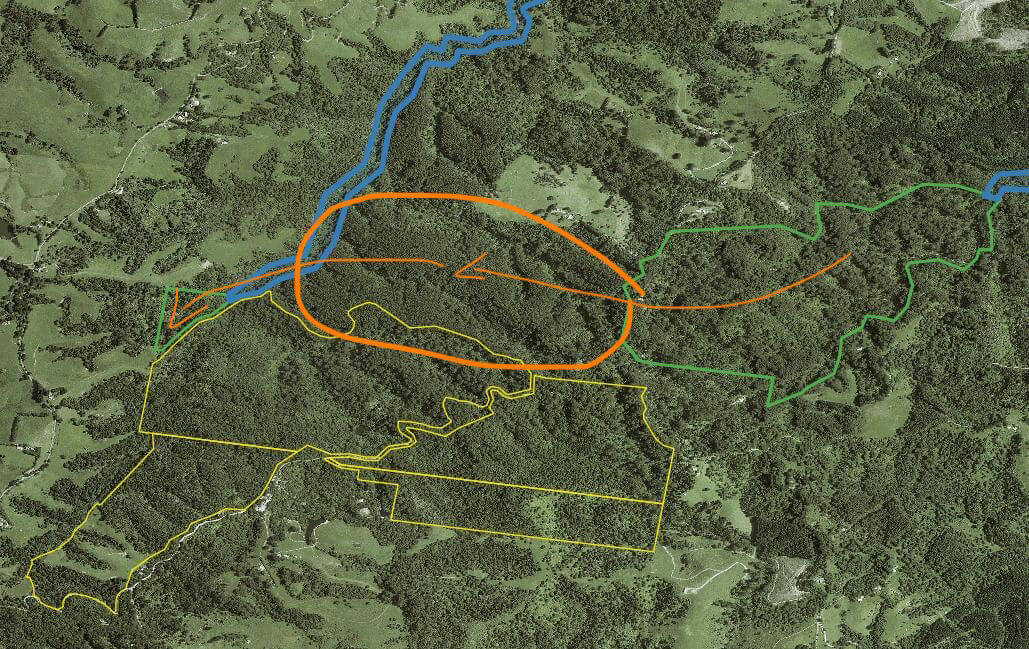
Turtons Creek - South Gippsland - Victoria
Just 15 minutes north of Foster, this vital biolink will connect the Turtons Creek Scenic Reserve to the Mirboo South Bushland Reserve through Crown land licensed to HVP.
Landscape Scale Connection
The Tarwin River Rainforest Refuge (orange) will provide an important link north to the Brataualung Forest Park and connect to the south toward the Hoddle range and Cape Liptrap.
Adjacent Conservation Properties
To the south are Trust for Nature properties, protected forever with a conservation covenant.
This Rainforest Refuge will be an important location for many of our most loved species and some of our most threatened.
We are in a biodiversity extinction crisis, and forestry is a major contributor to this. HVPs intentions are to 'clear fell' the existing forest of native species on this land and replace it with pine trees, a disaster for biodiversity.
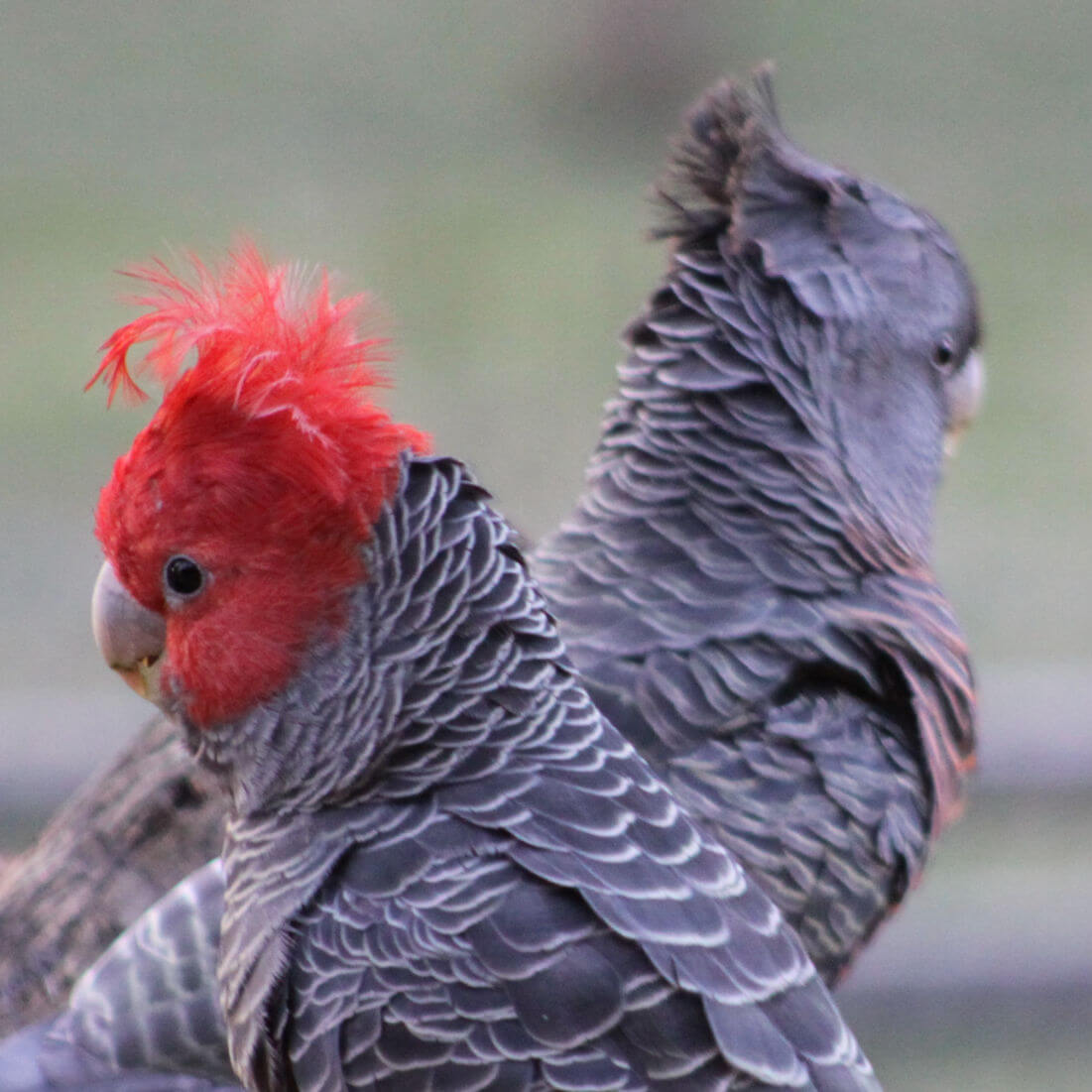
The Refuge will protect the Mountain ash forests that are habitat for Gang-gangs, Pilotbirds, Lyrebirds and the Strzelecki Koala, to name but a few.
Recent surveys have found that the Turtons Creek area including the proposed Rainforest Refuge contains the largest population of Slender Tree-ferns in Australia. One third of the known population are found here.
They are critically endangered - this means they are facing an extremely high risk of extinction in the wild in the immediate future.
Slender Tree-ferns are found in Cool Temperate Rainforest, this is also one of the most rare and threatened forest types in Victoria. We need to give these areas the best protection possible.
HVP are harvesting up to 20 meters from these delicate Slender Tree-ferns, whereas our conservation scientists have recommended 200m.
The Rainforest Refuge will provide the buffer zones needed for the Slender Tree-fern's survival.
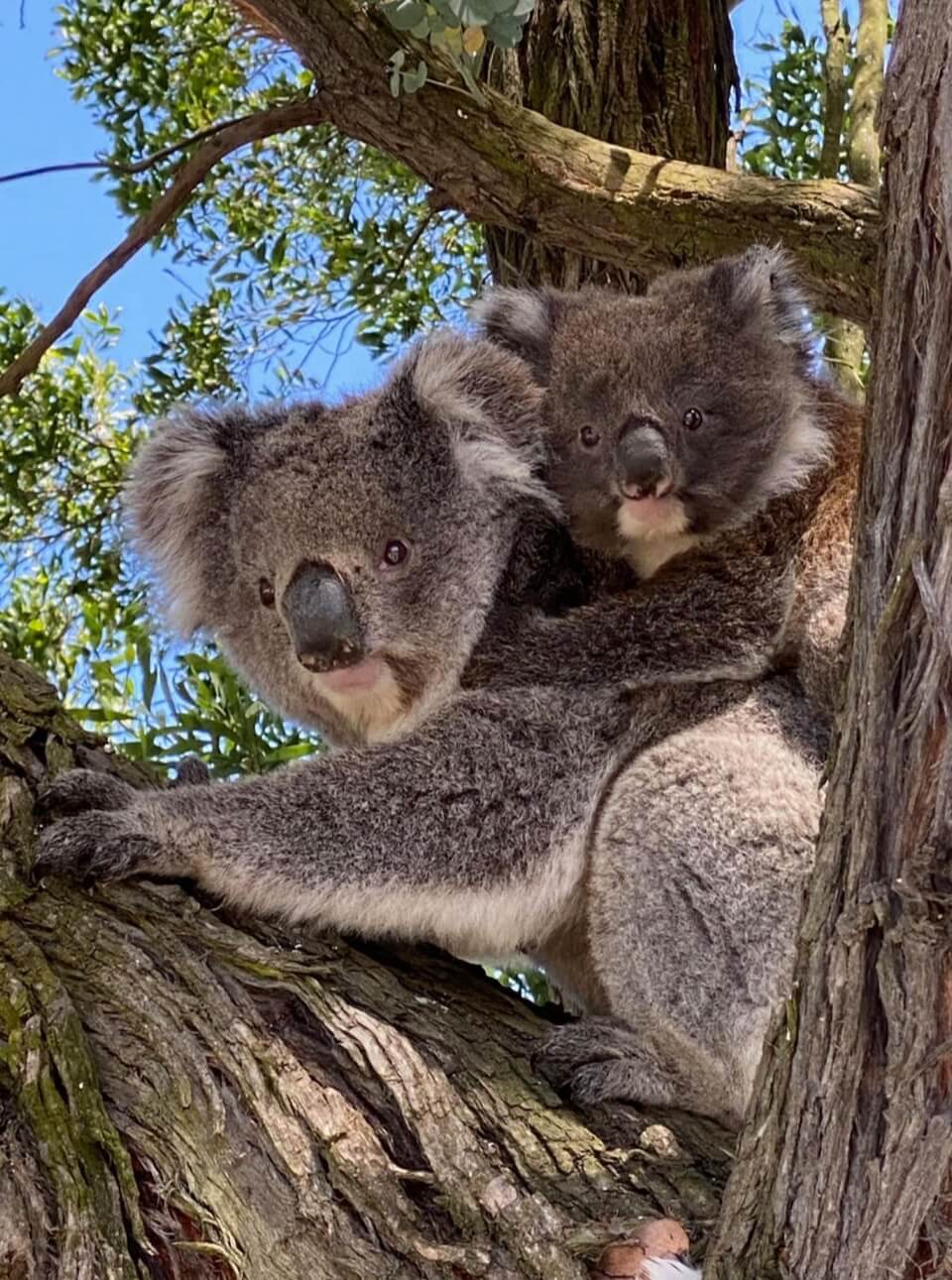
The Tarwin River Rainforest Refuge will provide a connecting corridor for the Koala and will retain the ridges of Bluegum and Mountain ash to sustain them.
HVP have logged much of this forest on our Crown land (above) and plan to turn it into a pine plantation. If HVP progresses with their logging and planting of pines, where will the Koalas go?
In February 2024 HVP drone surveys identified Koalas in the northern part of the refuge. This area has now been logged. These Koalas have been told to move on...
Is is estimated that over 10,000 hectares of Eucalyptus plantation in the Strzelecki Ranges will be converted to pines, reducing the amount of suitable habitat for the Koala.
Forest Stewardship Certification (FSC) Standards state that after harvesting, regeneration of forest should be to pre-existing or more natural conditions. Planting pines is not consistent with this FSC key principle.
Retaining and enhancing this small area of Eucalyptus in the Rainforest Refuge will be important for the Koala as a connecting link.
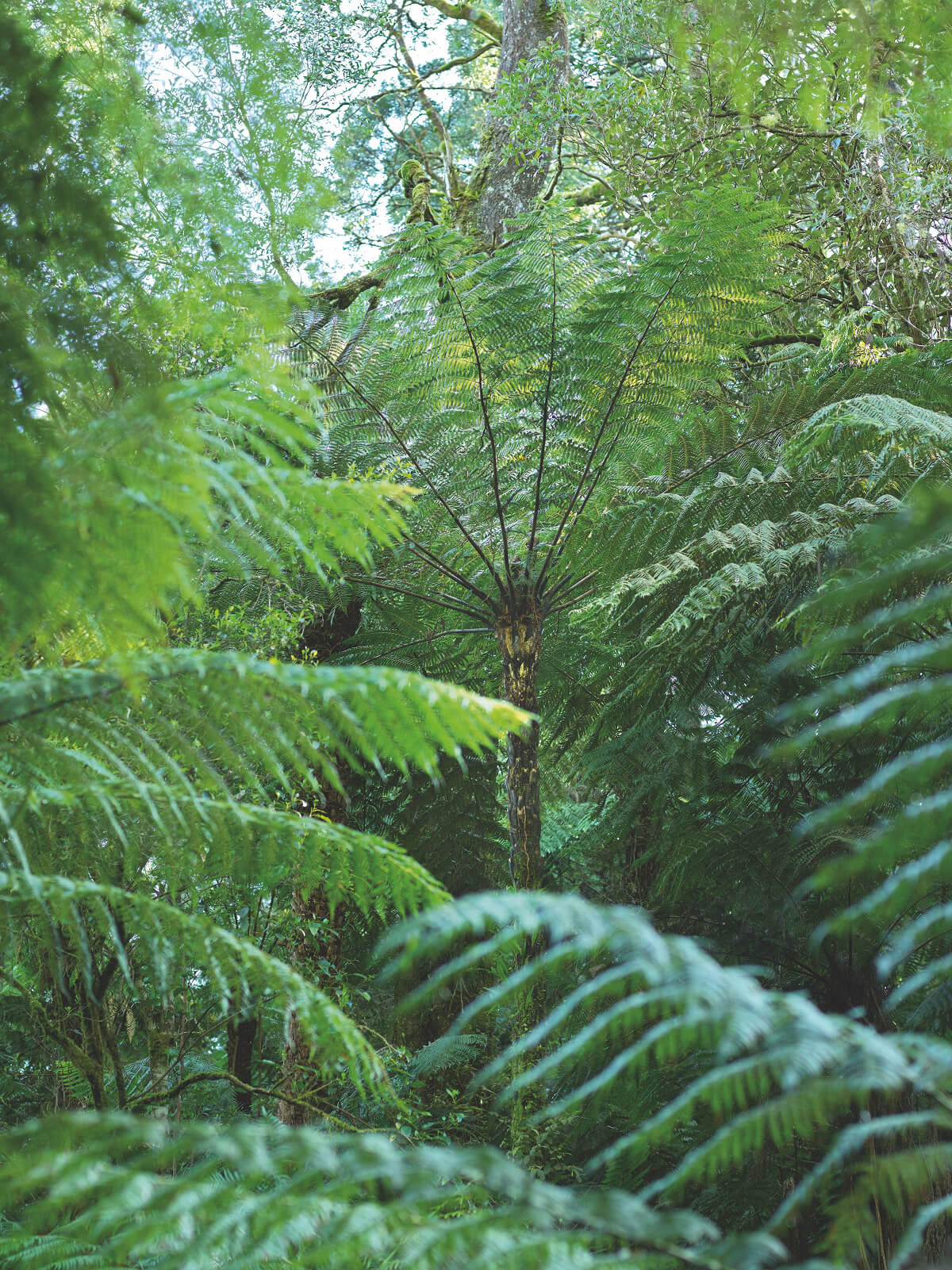
We call on HVP to retain the remaining unlogged areas of the Fella’s Track Coupe as a ‘rainforest refuge’.
This will protect the Cool Temperate Rainforest, Slender Tree-Ferns and other endangered species that are on that land and also increase buffer zones for other already protected land.
We believe HVP's plan to log and replant with pines in the middle of this significant conservation area is not in line with community expectations, HVP's own environmental and sustainability statements or the Forestry Stewardship Councils standards.
Click each image to learn more
The Rainforest Refuge is situated on Crown land that is owned by DEECA and licensed to HVP for forestry. We have discussed with HVP the idea of retaining the area for a Rainforest Refuge but sadly HVP have rejected our proposal and plan to go ahead with planting pines in the middle of this important conservation area.
Areas within the Crown land that are not being used for plantation are protected native vegetation. However, they are being damaged and are under threat due to inadequate buffer zones and forestry practices that negatively impact the conservation values of these areas.
Local councils are currently the regulating authority but we believe they do not have the capacity to effectively regulate HVP forestry across hundreds of thousands of acres in the Strzeleckis.
HVP are certified under the Forestry Stewardship Council (FSC) scheme. We are talking with FSC Australia about how they can ensure the protection of our critically endangered Slender Tree-ferns, so that consumers can have confidence that when buying FSC labelled products they are not supporting practices that harm out threatened species. FSC auditors have found significant non-conformances with the standards. We believe that there has been an appeal and are still working through the audit process.
Unfortunately, HVP have told us they don't have to follow the Action Statements under the FFG Act that are designed by our government scientists to protect our threatened species like the Slender Tree-fern. HVP plan to harvest the Eucalyptus species and replant with pines which is detrimental to biodiversity. We propose that the best conservation advice and management actions be applied to protect all threatened species, regardless of tenure.
We are currently talking with all stakeholders toward a community response to looking after this important reserve. We are working with Council, DEECA, Trust for Nature, neighbouring landholders and community groups to create best practice management and legal protection for our threatened species across land tenures.
The Rainforest Refuge would be an important community resource and add to the Turtons Creek Scenic Reserve and the popular Turtons Creek Falls. The Rainforest Refuge is Crown land and was once mapped as a protected part of the Strzelecki State forest. Community access and connection is important if we are to protect these areas for future generations.
We are a small not-for-profit group that incorporated in early 2024 to protect critically endangered Slender Tree-ferns and rainforest on our local Crown land.
Group members consist of neighbouring landholders and local families who know the importance of this area for conservation and have seen first-hand the impacts of industrial forestry on our rainforests and threatened species.
We work with the community to promote positive conservation initiatives, to share information and support the regulators responsible for protection of our endangered species.